



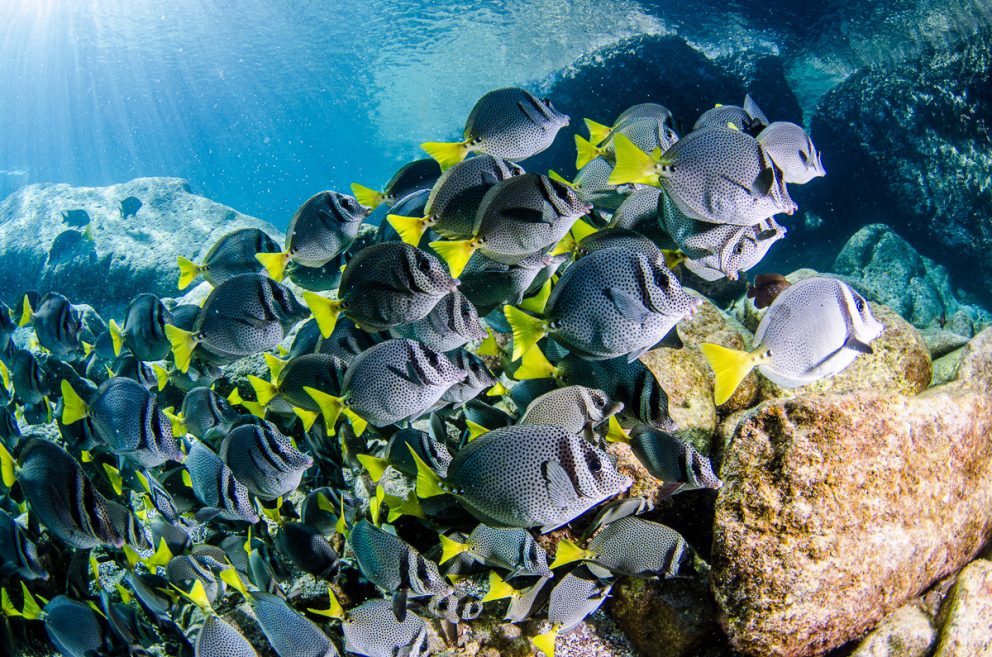
Cabo San Lucas, at the southern tip of the Baja California Peninsula, is where the Pacific Ocean collides with the Sea of Cortez. This unique crossroads of currents, temperatures, and habitats creates some of the most dynamic scuba diving in Mexico.
Let’s take a closer look at the geography and biology that make these dive sites so special.
The Sea of Cortez: A Marine Biodiversity Hotspot
The Gulf of California, also known as the Sea of Cortez, has long been celebrated as one of the world’s most diverse marine regions. Shaped by powerful oceanographic dynamics, it boasts shifting temperatures, rich productivity, and extensive coastlines that nurture countless life forms. Scientists divide the gulf into three biogeographic zones (upper, middle, and lower), each influenced by fauna from California, the Indo-Pacific, and Panama. (source: Arreola-Robles et al. 2002)
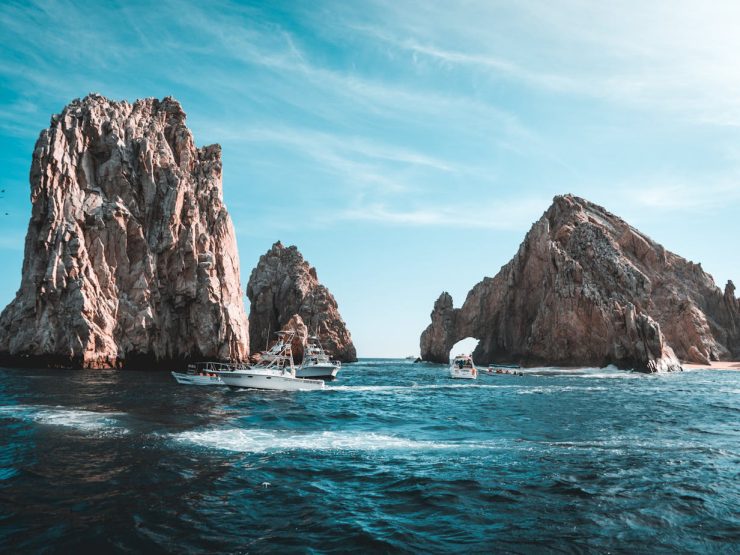
Cabo San Lucas: Where Desert Meets Ocean
Here in Cabo San Lucas, arid landscapes of sand dunes and rugged cliffs meet nutrient-rich waters. The mixing of Pacific and Cortez currents creates a high-productivity system, home to rocky reefs, sandy drop-offs, and vibrant walls. These habitats shelter a colorful mix of gorgonians, sponges, echinoderms, crustaceans, mollusks, and more.
Pelican Rock: A Versatile Playground for Divers
Just five minutes from the Cabo San Lucas marina, Pelican Rock dive site (Roca Pelícano) offers an underwater wonderland for divers of all levels. Shallow sandy bottoms give way to rocky reefs that drop to 40 meters.
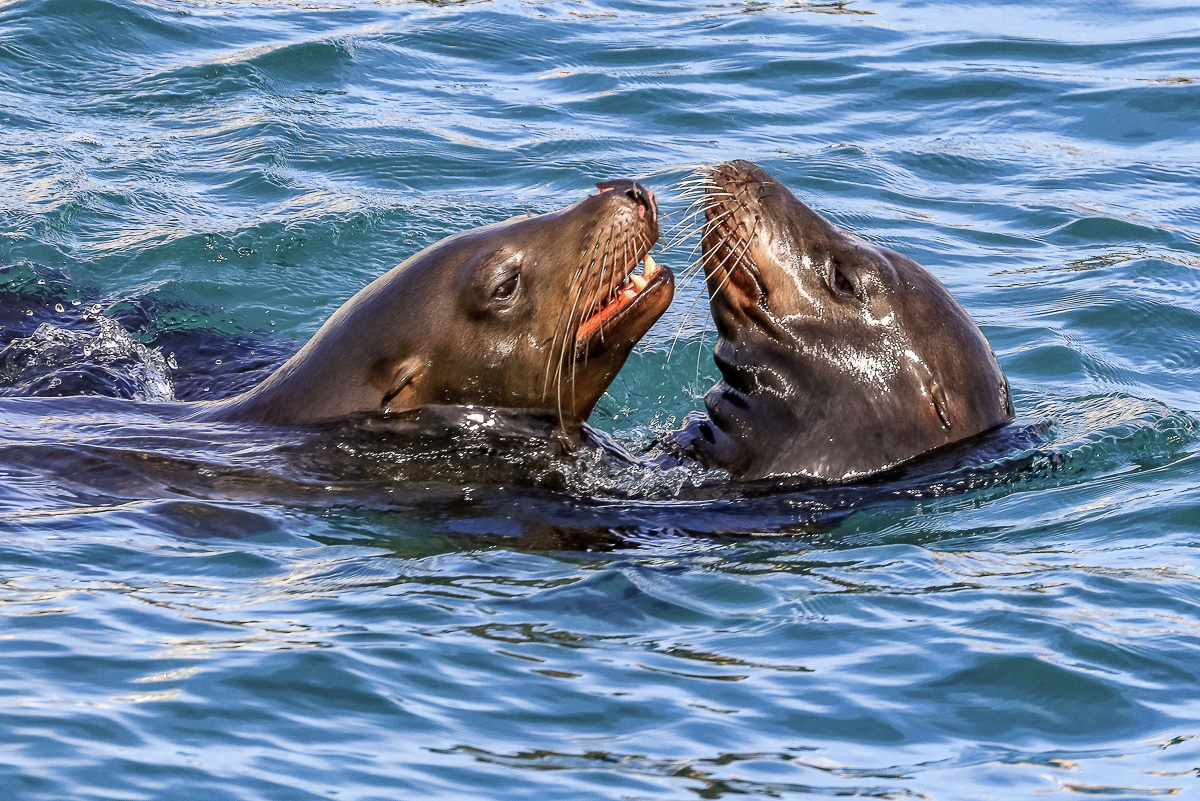
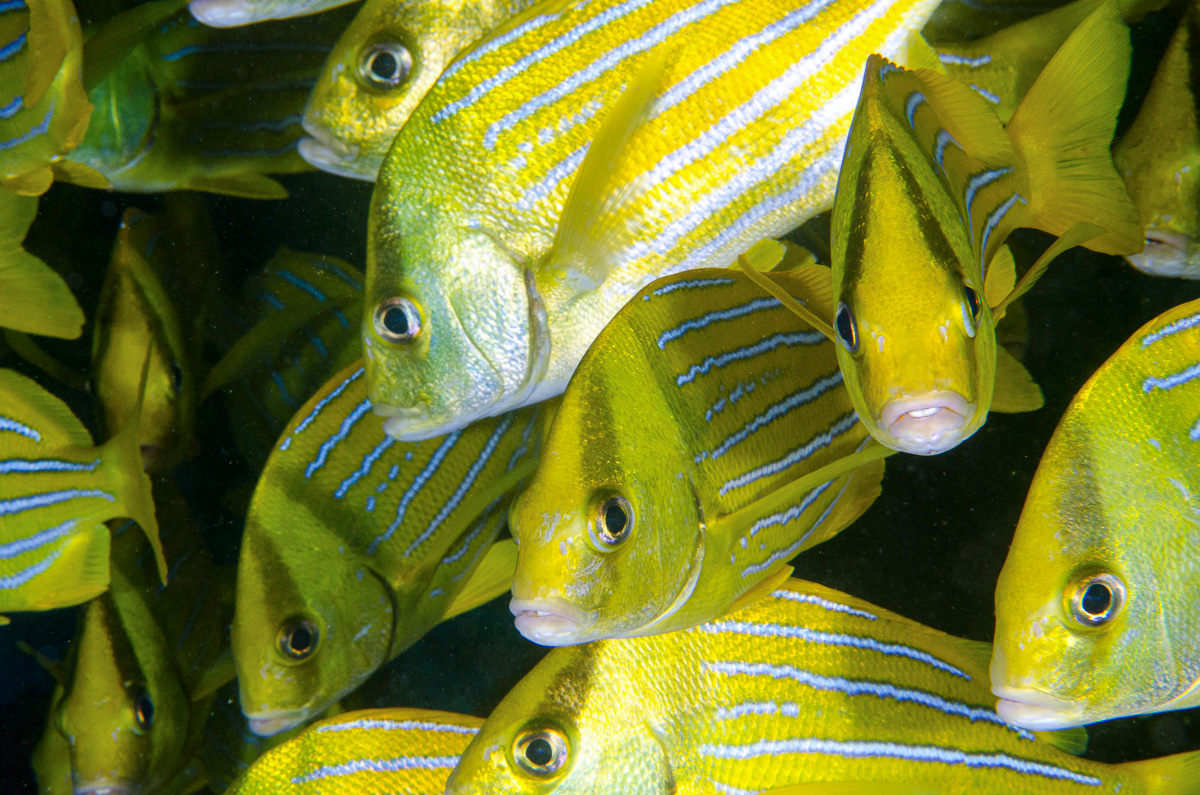
Expect encounters with sea lions, groupers, snappers, and rays an absolute must-dive in the bay.
North Wall: A Macro Photographer’s Dream
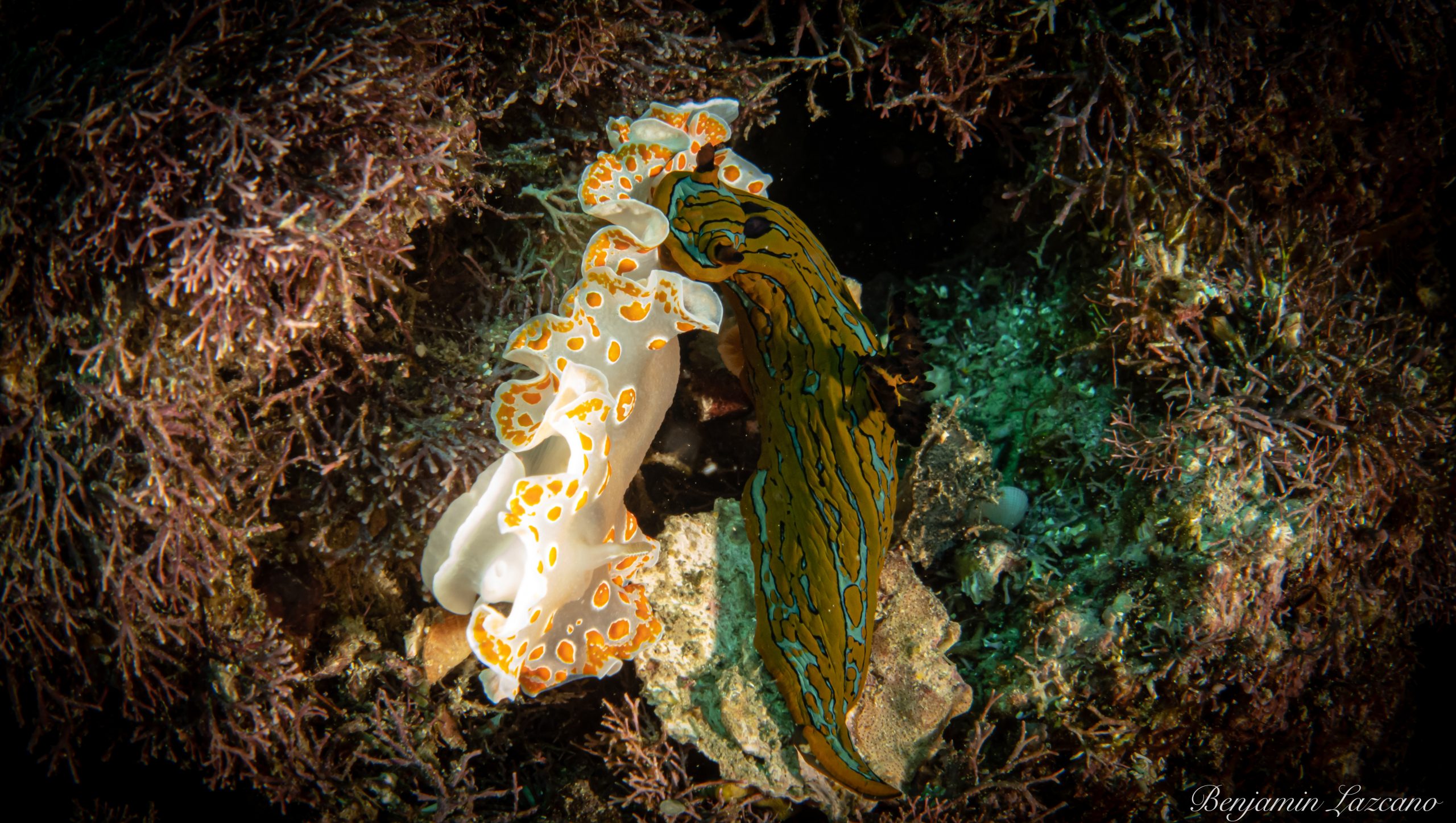
Continuing north from Pelican Rock, the North Wall blends sandy slopes with rocky reef. Macro enthusiasts will love this site home to nudibranchs, lobsters, guitar rays, frogfish, and the occasional seahorse.

Neptune’s Finger and Middle Wall: Deep Diving Encounters
For divers seeking depth and navigation practice, Neptune’s Finger and the Middle Wall deliver. Below 18 meters, you might find schooling cownose rays (Rhinoptera sp.), mobula rays (Mobula sp.), or even the sleek white-tip reef shark (Triaenodon obesus) cruising past.

Land’s End: The Tip of the Peninsula
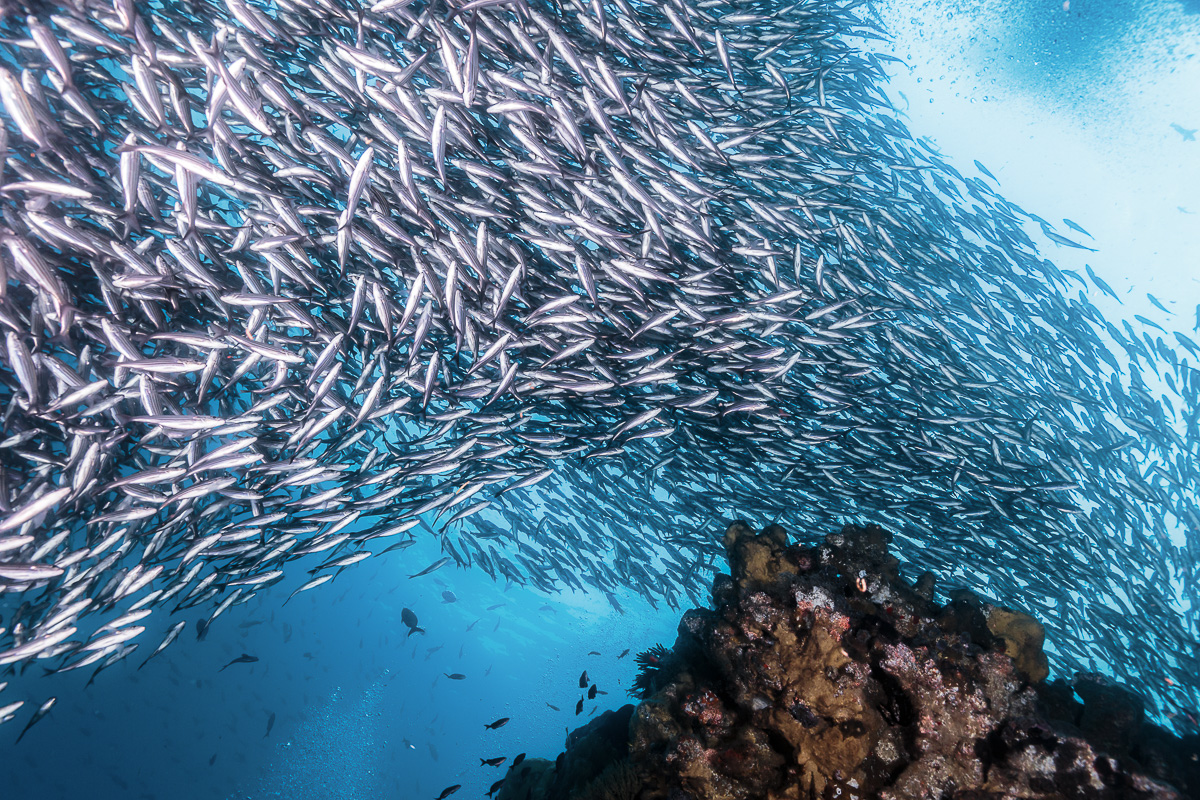
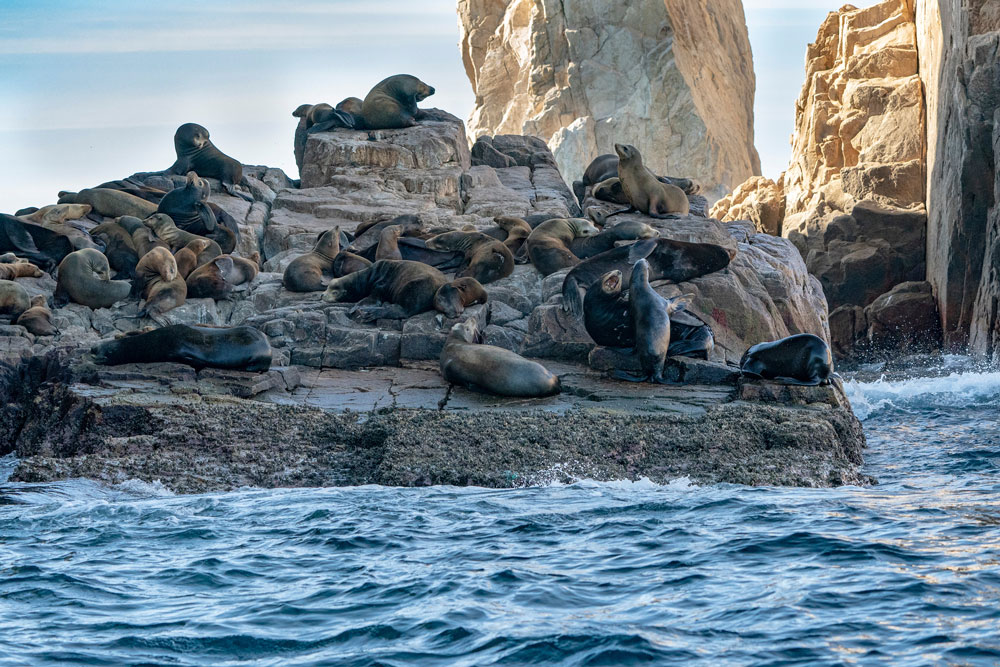
The famous Land’s End marks the meeting point of two oceans. Strong currents make this an exciting drift dive, with a sea lion colony, schools of rays, flounders, and scorpionfish adding to the thrill. Since hurricane Odile in 2014, the remains of the Lundberg shipwreck (sunk in 1954) are also visible here, an adventurous mid-level dive.
The Corridor: Cabo’s Outer Reef System
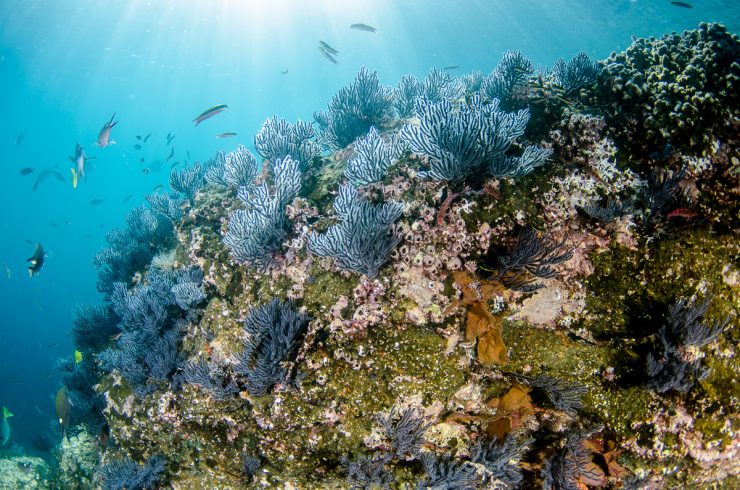
Beyond the bay lies “The Corridor,” a string of sites for all experience levels. Hard corals like Pocillophora, Pavona, and Porites shelter white-tip reef sharks, eagle rays, and whip rays. Highlights include:
Chileno Reef
Chileno dive site is a rocky reef extending into the Pacific, home to turtles, octopus, and schooling surgeonfish.
Whale Head Point
A seasonal hotspot where humpback whales teach their calves. Eagle rays often gather here to feed in Whale Head dive site .
Gavilanes & Blow Hole
Gavilanes & Blow Hole are known for their lush soft corals and sightings of white-tip reef sharks, snappers, and groupers.
SOURCES:
Arreola-Robles, José L., and Juan F. Elorduy-Garay. “Reef fish diversity in the region of La Paz, Baja California Sur, Mexico.” Bulletin of Marine Science 70.1 (2002): 1-18.
